

The H word
We have a bone to pick.

Hi all, Nina here, with my first post — and a bone to pick with a word. I'm not usually one for grievances, but for book people, words matter.
Since we launched Authors Equity, journalists have often reached for the shorthand “hybrid publisher” to describe us. It makes us squirm — and here’s why.
In the book world, “hybrid” is used as a catch-all for companies that sit somewhere between traditional publishing and self-publishing. In practice, it most commonly describes a fee-for-service model: authors pay upfront for editing, design, production, and printing. They receive a finished product, but limited reach into the retail market. That model works for some authors. It’s just not what we do.
Our authors don’t pay us. We fund every cost related to making and marketing the book — editorial, design, production, promotion, and more — and we only get paid if the book is profitable. That means we have every incentive to reach the widest possible audience and actively sell and distribute to all retailers and libraries, which we do via a distribution partnership with Simon & Schuster. We share 60–70% of profits with our authors — meaningfully more than the profit-share arrangements traditional publishers occasionally offer, and significantly more than the standard advance-against-low-royalties model that leaves many authors with far less than their work deserves.
Some journalists might apply the “hybrid” label because we don’t pay advances. But the absence of an advance doesn’t mean the absence of commitment. We are fully invested — financially, strategically, and creatively — in every project we take on. We work with authors as genuine partners, collaborating on every aspect of the publishing process. We bring decades of publishing experience, established industry relationships, and new partnerships with people who aren’t typically part of the book world at all. Our incentives are fully aligned with those of our authors.
A separate source of the hybrid misnomer might involve format rights. We sometimes work with authors who have previously self-published, and in a small number of cases we’ve agreed the author can continue to sell a certain format directly if we don’t believe we can add meaningful value. Our job is to build the best possible publishing plan for each book, not to collect rights by default. But even in those cases, we’re all in with every one of our authors.
The same thinking applies to our licensing terms: rather than locking authors into the standard life of copyright in the U.S. — a lifetime plus seventy years — we license rights for ten years at a time. We believe we should have to earn our place as partners, not just assume it. None of that is hybrid thinking. It’s the opposite.
Why do we care about this label? Because words shape expectations. “Hybrid publisher” implies we’re half-in, half-out. That framing misses what we’ve actually built: a model that takes the best of traditional publishing — the expertise, the relationships, the distribution reach — and pairs it with the freedom to think differently about how books reach readers, and an economic structure that finally reflects something that has always been true: authors are essential to their book’s success, and they deserve to benefit accordingly. That’s the root of what publishing should be. No qualifiers needed.
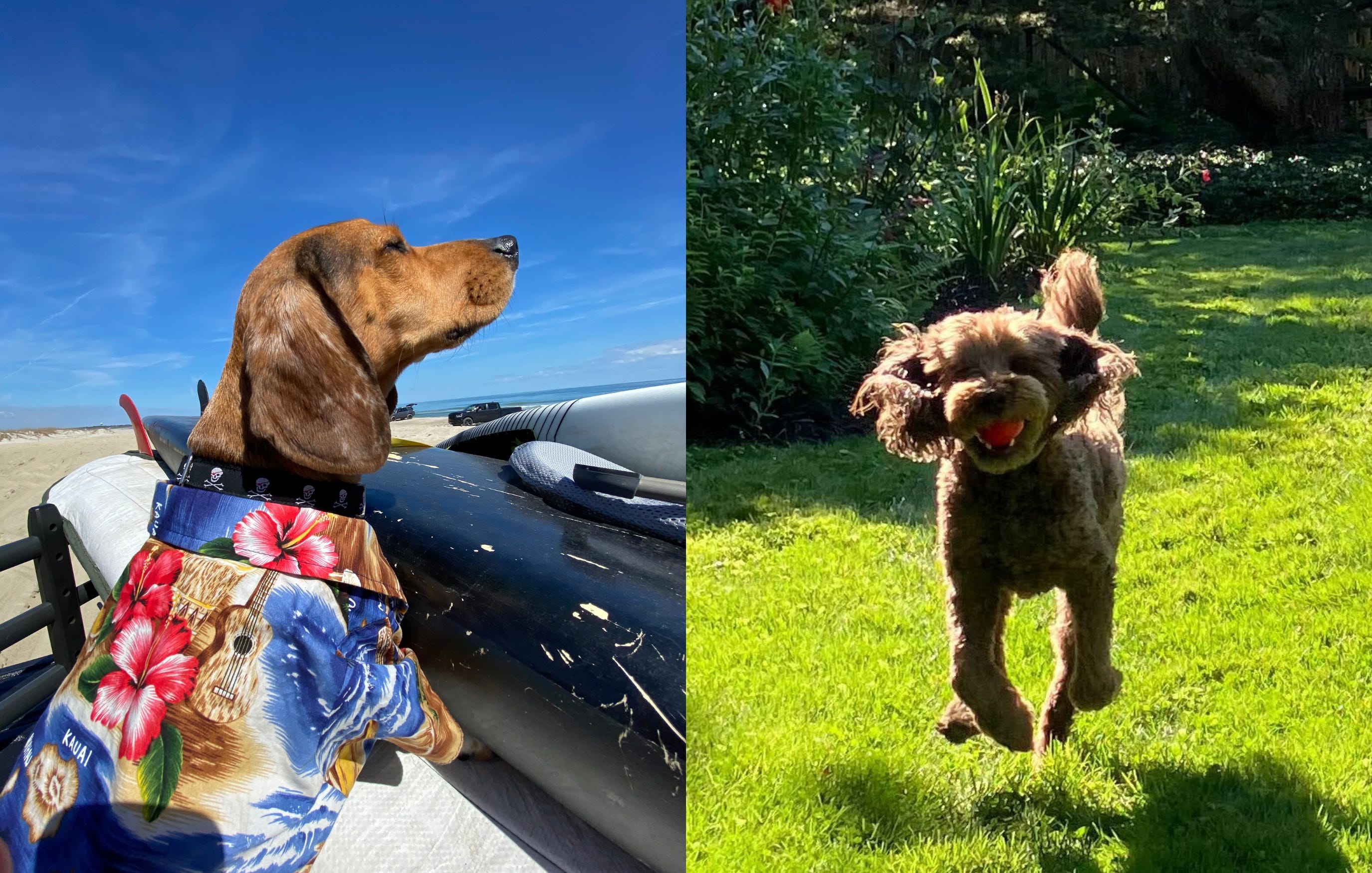
Those dogs are mutts, not hybrids. And proud of it. A Prius, on the other hand, is a hybrid.
I think the key differentiator here is the emotional commitment. The incentive of firms that get paid to publish for authors (previously known as a vanity press) is to do the work and move on. It's a pay-for-service model, and doing a good job on the service gets you paid. But doing a good job is not the same as being focused, committed and driven.
AE is actually more committed than most publishers that pay advances. It's not just because the model forces you to focus on the outcomes, it's because of the people on your team.
In 40 years of publishing, I've never worked with a group that was more consistently and persistently committed to the craft, and as aligned with the authors as you are.
And you have mutts.
As someone who has worked on both extremes (self-publishing without a “hybrid firm” and traditional publishing with the big dogs), my experience with Author’s Equity has been everything I hoped publishing would be. I agree with Seth that I’ve never worked with a more committed team. I’m constantly telling my agent how much I love you guys.